

🌟 Types of Social Media Influencers

Social media influence isn’t just about the size of a following—it’s about trust, niche expertise, and engagement.
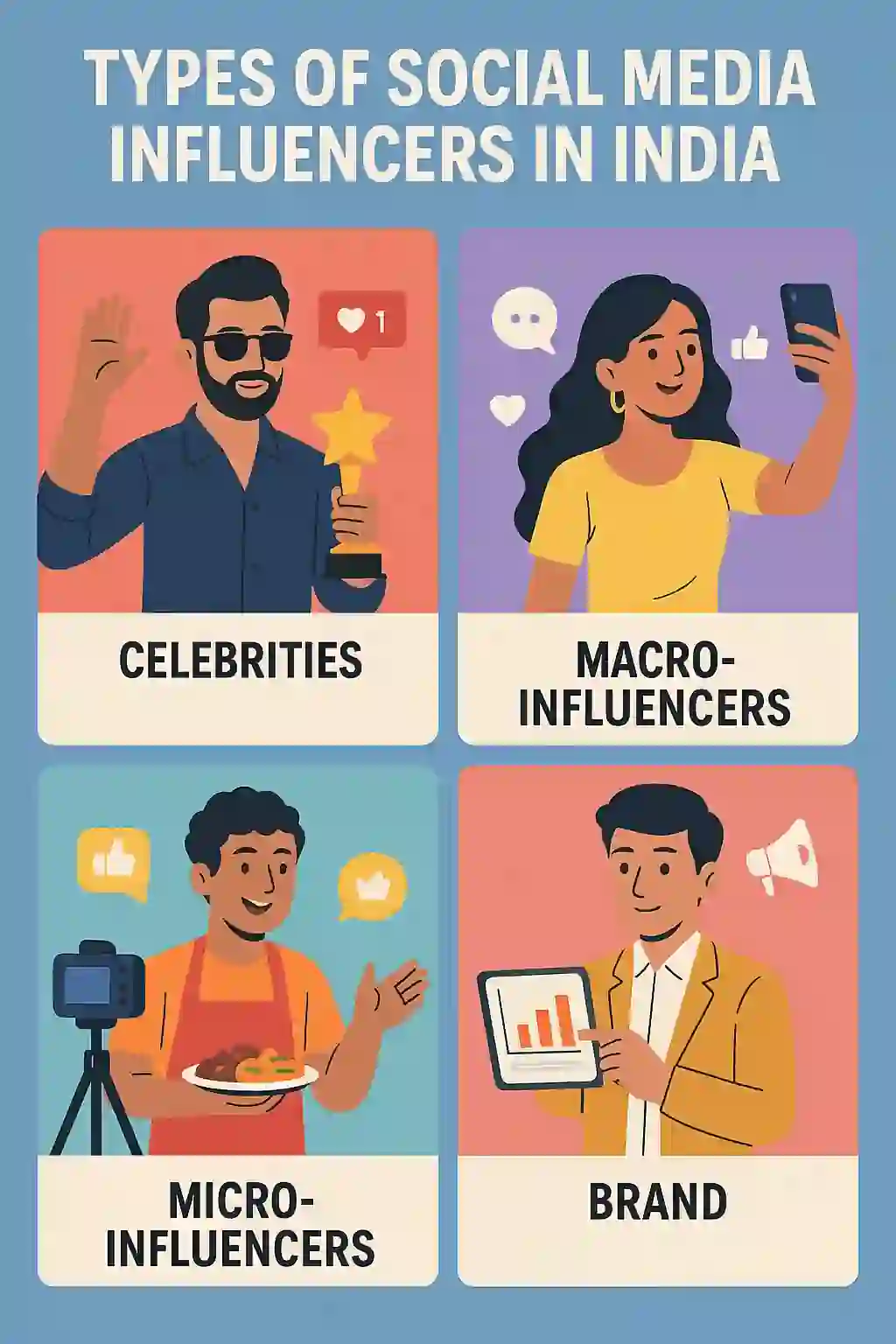
Traditionally, we did not have this benefit to influence people but social media influencers are playing a significant role in this digital age to help brands by spreading positive word of mouth about the product to their followers.
We can also see a significant number of social media analytical websites like TopTamilInfluencer.com providing useful insights about different influencers from different categories.
Note: Higher subscribers do not guarantee more influence. The types of social media influencers are mainly based on the number of subscribers, audience engagement, and the frequency of their content.
Who Are Social Media Influencers?
Social media influencers are individuals who have established credibility in a certain area or field via social networks like YouTube, Instagram, Twitter, etc. Influencers have developed strong relationships and respect on social media through various topics they are experts in. Brands work with influencers to build awareness, promote product launches, and create an authentic connection with target audiences.
1. Celebrities
Followers: 1M+
People with over a million followers or subscribers are considered celebrities on social media. These individuals are often actors, athletes, or high-profile public figures. They offer immense reach and are best for short-term brand visibility campaigns.
🔍 Quick Tip: Best for short-term visibility; may require heavy investment and aren’t always a long-term match.
2. Macro-Influencers
Followers: 100K–1M
These are bloggers, vloggers, or content creators who cover broad topics. They are slightly more accessible than celebrities and bring a mix of wide reach and topical expertise.
💡 Smart Strategy: Brands often pay based on reach and niche fit—choose carefully for best ROI.
3. Micro-Influencers
Followers: 1K–100K
These influencers are niche subject-matter experts who maintain strong, engaged communities. They’re highly relatable and offer better engagement than macro or celebrity influencers.
👍 Why They Work: Affordable pricing and deeply trusted by followers.
4. Employees
These are your internal champions. Colleagues who share genuine experiences about your brand on their own platforms.
📣 Why It Matters: Builds internal trust, adds authenticity and cost-effectiveness to campaigns.
5. Customers
Real users who create user-generated content (UGC), testimonials, or post reviews online. Their experience can influence buying decisions powerfully.
📈 Stats Show: Customer referrals have 16% higher lifetime value than non-referrals.
6. Brand Fans
Enthusiastic followers who promote your brand not because they’re paid—but out of genuine passion.
🌱 Growth Insight: Fan communities are grassroots drivers of consistent brand love.
🧠 Influencer Insights
- It’s not just about follower count—engagement and trust matter even more.
- Mix and match influencer types depending on your campaign goal.
- Combine celebrities for mass visibility and micro-influencers for authenticity.
- Real users (customers, employees) can be just as powerful.
🛠️ How to Apply This
| Campaign Goal | Best Influencer Type | Why? |
|---|---|---|
| Max Visibility | Celebrities, Macro | High follower count, broad reach |
| Niche Authenticity | Micro, Brand Fans | Trust-driven, tightly knit audiences |
| Credible Messaging | Employees, Customers | Authentic and relatable endorsements |
✨ Final Thoughts
No single influencer type is a silver bullet. The smartest brands combine multiple influencer types—celebs for reach, niche influencers for trust, and fans or employees for authenticity. This layered approach builds visibility, credibility, and connection.